

Types of Tea: A Guide to the Different Types of Tea
Black tea, green tea, white tea, oolong, matcha and pu-erh can look and taste remarkably different, yet they all have something important in common: they come from the same tea plant, Camellia sinensis.
The enormous variety found in tea is created by where it is grown, the variety of tea plant, when the leaves are harvested and, importantly, how they are processed after picking. Alongside traditional tea is another world of herbal infusions made from flowers, leaves, roots, herbs and spices.
Discover the main types of tea, what makes each one distinctive and the flavours you can expect to find in your cup.
What Are the Main Types of Tea?
True tea is produced from the leaves of the Camellia sinensis plant. From this single plant come black tea, green tea, white tea, oolong and dark or post-fermented teas such as pu-erh.
Matcha is a distinctive form of Japanese green tea, while purple tea is produced from particular tea cultivars whose leaves contain naturally occurring anthocyanin pigments.
Herbal teas such as peppermint, chamomile, hibiscus and rooibos are different. They aren't produced from Camellia sinensis, so they are more accurately described as herbal infusions or tisanes.
Why Do Different Types of Tea Taste So Different?
Much of the answer lies in processing. Once tea leaves are picked, the producer can control how they are withered, rolled, oxidised, heated and dried.
Oxidation is particularly important. When cells within a tea leaf are damaged during processing, enzymes interact with oxygen, gradually changing the colour, flavour and chemical composition of the leaf. A useful comparison is how a cut apple gradually turns brown when exposed to air.
Green tea is heated relatively early to limit oxidation, while black tea undergoes much more extensive oxidation. Oolong sits across a broad spectrum between these styles, while white tea generally undergoes comparatively minimal processing.
Processing, however, is only part of the story. Origin, altitude, climate, soil, tea cultivar and harvesting season can all influence the character of the finished tea. That's why two teas made from the same plant but grown thousands of miles apart can taste remarkably different.
Black Tea
Black tea is one of the most familiar types of tea in Britain. Its leaves undergo extensive oxidation before drying, creating the darker appearance and fuller flavours associated with the style.
There is no single flavour that defines black tea. Assam can be bold, rich and malty, while high-grown Ceylon can be bright and brisk. Darjeeling can be lighter and more aromatic, while teas from Nepal, Kenya, China and other origins each offer their own distinctive characteristics.
Black tea also forms the foundation of many traditional breakfast tea blends.
How to brew: Use around 2–3g of tea per 250ml of water at 95–100°C and infuse for 3–5 minutes.
Green Tea
Green tea is processed differently from black tea. After harvesting, heat is applied relatively early to limit oxidation. Depending on its origin and production method, this may involve steaming or heating the leaves in a pan.
Green tea can vary enormously in flavour, from fresh and grassy to sweet, vegetal, savoury or gently nutty. China and Japan are particularly famous for their green teas, although excellent examples are now produced in many tea-growing countries.
How to brew: Use water around 70–80°C and infuse for 2–3 minutes. Using boiling water can make some green teas overly bitter or astringent.
Matcha
Matcha is a type of Japanese green tea, but it is prepared very differently from conventional loose leaf tea. Leaves intended for matcha are processed into tencha before being finely ground into a powder.
Instead of infusing the leaves and removing them, matcha is whisked directly into water, meaning the tea itself becomes part of the finished drink.
Good matcha can have a rich green appearance, silky texture and complex balance of vegetal, sweet and savoury characteristics. Traditionally it is whisked with water, although today it is also widely enjoyed in lattes and iced drinks.
White Tea
White tea is generally characterised by relatively minimal processing. The harvested leaves or buds are typically withered and dried with less deliberate manipulation than many other tea styles.
This can produce delicate floral, sweet, fruity or gently hay-like characteristics. Despite its delicate reputation, white tea isn't necessarily weak; different origins, varieties and ageing can create surprisingly varied flavours.
How to brew: Try water around 80–90°C and infuse for 3–5 minutes.
From Oolong to Herbal Tea: Exploring the Wider World of Tea
Oolong Tea
Oolong occupies an enormous spectrum between broadly green and heavily oxidised tea styles. Although often described as sitting between green and black tea, that simple description doesn't capture the extraordinary variety within the category.
Some oolongs are green, light and floral, while others are darker, roasted, fruity or rich. Many quality oolongs are particularly well suited to multiple infusions, with their flavour developing as the leaves gradually unfurl.
How to brew: As a starting point, use water around 80–95°C and infuse for 2–4 minutes.
Pu-erh Tea
Pu-erh is traditionally associated with Yunnan province in China and belongs to the wider family of post-fermented teas.
It is commonly divided into two broad styles: sheng, often translated as raw pu-erh, and shou, commonly described as ripe or cooked pu-erh. Depending on its production and age, pu-erh can range from fresh and complex to deep, smooth, earthy or woody.
How to brew: Use water around 95–100°C and infuse for 3–5 minutes. Many pu-erh teas are also excellent for repeated infusions.
Purple Tea
Purple tea is produced from particular cultivars of Camellia sinensis that develop purple pigmentation in their leaves due to naturally occurring anthocyanins.
It has become particularly associated with Kenya, where purple-leaf cultivars have been developed and grown. These leaves can be processed in different ways, meaning 'purple tea' describes the characteristics of the plant rather than one universal method of tea production.
Herbal Tea and Infusions
Not everything commonly called tea actually comes from the tea plant. Herbal teas are made by infusing other plants, including leaves, flowers, roots, fruits, seeds and spices.
Peppermint offers a cooling, intensely minty flavour; chamomile is delicate and floral; hibiscus produces a vivid crimson infusion with a sharp, fruity character; rooibos is smooth and naturally caffeine free; ginger is warming and spicy; and fennel has a gently sweet, anise-like character.
Most herbal infusions are naturally caffeine free because they don't contain Camellia sinensis, although it is always worth checking the ingredients of a blend.
How to brew: Most herbal infusions benefit from water around 100°C and a longer infusion of approximately 5–7 minutes.
Which Types of Tea Contain Caffeine?
All conventional teas made from Camellia sinensis naturally contain caffeine. This includes black, green, white, oolong, matcha, purple tea and pu-erh.
The amount in your cup can vary considerably depending on the leaves, growing conditions, processing, quantity of tea, water temperature and brewing time.
Herbal infusions such as peppermint, chamomile, hibiscus and rooibos are naturally caffeine free. Decaffeinated tea is different: it begins as caffeinated tea before undergoing a process that removes most of its caffeine.
Does Where Tea Is Grown Make a Difference?
Origin can have a significant influence on the character of tea.
India alone produces distinctive teas in Assam, Darjeeling and Nilgiri, each with different growing environments and traditions. Sri Lanka, historically associated with the name Ceylon, produces tea across several elevations and growing regions.
Kenya is one of the world's major tea-producing countries, China is home to an extraordinary diversity of traditional tea styles, and Japan is particularly renowned for green tea. Nepal's high-altitude gardens can produce beautifully distinctive teas of their own.
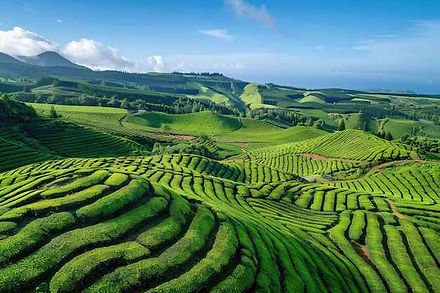
Even Europe has a small tea-growing tradition in the Azores, where tea has been cultivated on the volcanic island of São Miguel.
Which Type of Tea Should I Choose?
Your ideal tea ultimately depends on the flavours you enjoy.
For a strong, full-bodied cup, explore black tea, particularly Assam and traditional breakfast blends. If you prefer something lighter and fresher, try green tea. White tea is ideal for exploring more delicate flavours, while oolong and pu-erh open up an entirely different world of complex flavours and multiple infusions.
For something naturally caffeine free, explore herbal infusions such as peppermint, chamomile, rooibos or hibiscus.
The best way to understand the different types of tea is ultimately to taste them.
Explore the World of Loose Leaf Tea
A single plant – Camellia sinensis – can produce everything from delicate green and white teas to rich black tea, complex oolong, powdered matcha and aged pu-erh. Change the origin, altitude, harvest or processing and another layer of variation appears.
At R-tea, part of our enjoyment of loose leaf tea comes from understanding what's actually in the cup. We seek out quality teas with a focus on provenance, aiming for single garden tea where possible and at least single origin wherever practical. When creating blends, we use real ingredients rather than relying on added flavourings or oils.
Whether you're discovering loose leaf tea for the first time or exploring a new origin, there's always another tea, flavour or story waiting to be discovered.
Continue learning with our Loose Leaf Tea Guide, discover How to Brew Loose Leaf Tea, find the right Tea Brewing Temperature, or explore our guides to individual Tea Origins.